
China's economy is in transition, with rising wage costs and massive overcapacity.

'Those betting against PSUs will likely be punished in this upswing.'
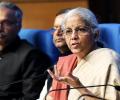
The eighth Budget of Finance Minister Nirmala Sitharaman continued to focus on 'GYAN' (Garib, Youth, Annadata, Nari) to maintain a consistent and coherent strategy initiated over the years in pursuing the government's vision for Viksit Bharat. The approach, characterised by incremental yet impactful steps, aims to create a compounding effect over time.

IMF, which has also lowered its global economic growth forecast for 2016 and 2017 by a marginal 0.1 per cent to 3.1 and 3.4 per cent respectively, recommended six 'reform priorities' for India
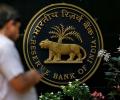
RBI said aggregate demand during the year so far suggests that the shock to consumption is severe, and it will take quite some time to mend and regain the pre-COVID-19 momentum.

'India is doing better than when we took office 17 months ago'.

Finance Minister P Chidambaram said on Wednesday that the recent electoral verdict has mandated him to protect and promote that part of the public sector that has created wealth and made India stronger while providing space for the private sector.
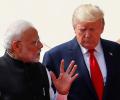
'While criticising India's high tariffs, Mr Trump stated he would impose reciprocal taxes on Indian products if re-elected.' 'However, since India's tariffs follow WTO rules, Mr Trump's actions would violate these rules,' Ajay Srivastava points out.

Narendra Modi government, the US Treasury Secretary Jacob Lew on Thursday said India needs more reforms
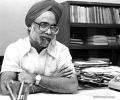
What stood out in his 15-year journey as a member of the political executive at the Centre was his glowing record as India's most successful and effective finance minister. Both as prime minister and finance minister, he understood the importance of gradualism, except when the economy or the polity was in a crisis.

The overall physical presence of life insurance companies in Tier-II and Tier-III cities increased in FY23 compared to a year ago period on account of the higher impetus given to financial inclusion by the government and insurance regulator, as well as recovery from the Covid-19 pandemic, according to the latest data released by the Insurance Regulatory and Development Authority of India (Irdai). It is the first time that there has been growth in the number of offices since the financial year 2019-20.

'Suddenly we had a new comprehension of affairs, which reminded that the luxury of politics floated atop a foundation by economics.' 'Along with this, finance ministers became crucial in molding the perception and reputation of Union Cabinets.' 'Governments couldn't afford a wrong person in that portfolio,' asserts Shyam G Menon.

Instead of announcing new schemes, focus will be on those already announced and key sectors.

Prime Minister Narendra Modi on Tuesday said India will become the growth engine for the world in the coming years, and the ease of doing business has improved with "mission-mode" reforms being undertaken by his government. Speaking at the BRICS Business Forum Leaders' Dialogue in Johannesburg, Modi also said India soon will become a $5 trillion economy.

'Any finality in such matters requires political views. We will review it closer to the full Budget.'

The National Security Strategy document should flag all major issues concerning security strategy and provide guidelines to concerned departments to work out suitable action plans. Since the global and regional geopolitical canvas is dynamic, the NSS document should be deliberated at length before formulation and should be reviewed periodically, recommends Commodore Venugopal Menon (retd).
Pharma stocks have performed well after Budget
It is increasingly clear that Rajasthan, under the leadership of Chief Minister Vasundhara Raje, will lead the country in terms of policy reform.
'We emphasise the importance of not basing investment decisions solely on electoral outcomes.' 'Instead, focusing on investing in high-quality businesses capable of prospering regardless of the political landscape is paramount.'

Stating that open markets mean more opportunities, Modi said during the last six years the government has made many efforts to make the Indian economy more open and reform oriented.

'We have all the technologies available, but it should be converted to something that can be commercially viable.'

'We see the defence industry as one of the leading sectors, which will significantly contribute to the growth of the Indian economy, but more importantly, bring atmanirbharta to national security.'

Metal stocks also had a good session, with JSW Steel zooming by 7%, and Tata Steel and Nalco gaining about 3% each.
Amid slowdown blues, the government has unveiled a raft of measures over the past few months aimed at improving liquidity in the system, moderating interest rates as well as credit growth apart from addressing stress in the NBFC sector.

The panel's report also provides a range for fiscal deficit and debt path of both the Union and states and also recommended additional borrowing room to states based on performance in power sector reforms. Finance Commission is a constitutional body that gives suggestions on Centre-state financial relations. The report of the 15th Finance Commission was tabled in the Lok Sabha by Finance Minister Nirmala Sitharaman.

Nifty, which has struggled around 8550-8560 levels managed to blast past this resistance and close above the psychological mark of 8600.

IBC has been revolutionary in many ways and is a formidable instrument for stress resolution. And despite the room for improvement, the overall effectiveness of IBC in the distress space is unmatched, notes Saloni Kothari.

Banking secot to see major changes by 2020.

Stocks of public sector undertakings (PSUs) have been on fire in the past year as investors cheered an improvement in key operating metrics and embraced counters of these state-owned enterprises, analysts suggest. The S&P BSE PSU Index has gained over 90 per cent in the past year, rising much higher than the S&P BSE Sensex, which has rose nearly 19 per cent during this period, according to ACE Equity data. The BSE PSU Index, reports show, has delivered a compound annual growth rate (CAGR) of 28 per cent (including dividends reinvestments) over five years and risen by almost 60 per cent in the past year.

The government has only taken a pause and more measures will be announced in the days to come to help sectors hit by the coronavirus outbreak and also to make India 'Atmanirbhar Bharat', Minister of State for Finance Anurag Thakur said. Since the outbreak of the pandemic, the government has taken several steps to mitigate the hardships of the people due to lockdown and support growth, Thakur told PTI in an interview.

Prime Minister Narendra Modi has said that India's economic growth is a 'natural by-product' of his nine-year-old government's political stability, as he expressed optimism that it will be a developed nation by 2047 with 'corruption, casteism and communalism' having no place in our national life.

Prime Minister Narendra Modi addressed the nation from the ramparts of Red Fort in New Delhi as India celebrates the 72nd Independence Day. This is Modi's fifth and final address as PM in the current tenure. During his speech, Modi reflected on the achievements of the National Democratic Alliance government and presented a report card of his four-year tenure. Here are the main takeaways from his address:

Jigar Shah, chief executive officer, Maybank Kim Eng Securities is not certain that the DMart listing would trigger a re-rating of the Indian retailing sector.

'The Modi government is about privatising profits and nationalising losses.'
The government was going in the "wrong direction" and it was "highly condemnable" that it did not discuss the proposed changes with trade unions and other stakeholders, says BMS, trade union arm of the RSS.

This is the full text of the address to the nation by President Droupadi Murmu on the eve of India's 78th Independence Day.

The sector needs to move away from such concepts.

The Survey projected growth rate of 7-7.75 per cent for 2016-17 with downside risks due to weak global economic scenario.

The climate for 'doing business' remains forbidding, taxtortion is still rife, corruption at state and district levels has increased, oil prices remain extortive with high taxation, and the continued red tape has kept the enterprise system as stifled as before, points out Debashis Basu.

India's manufacturing PMI rose to 54.5 in December, 2014, while in the corresponding period a year ago it stood at 50.7, just above the crucial 50 mark which separates growth from contraction.
